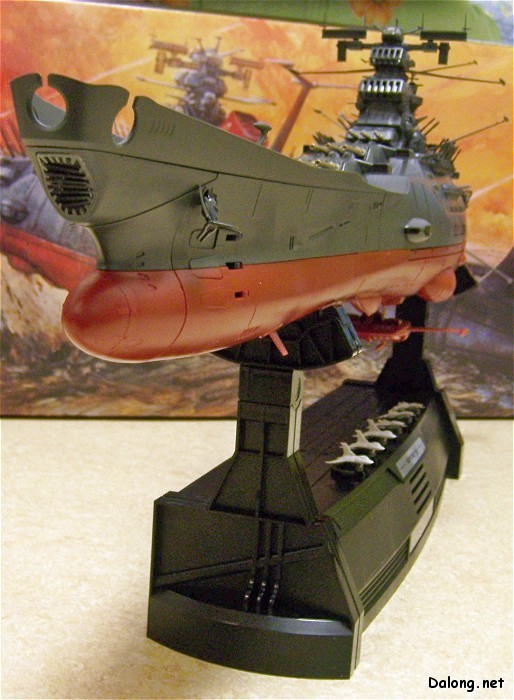
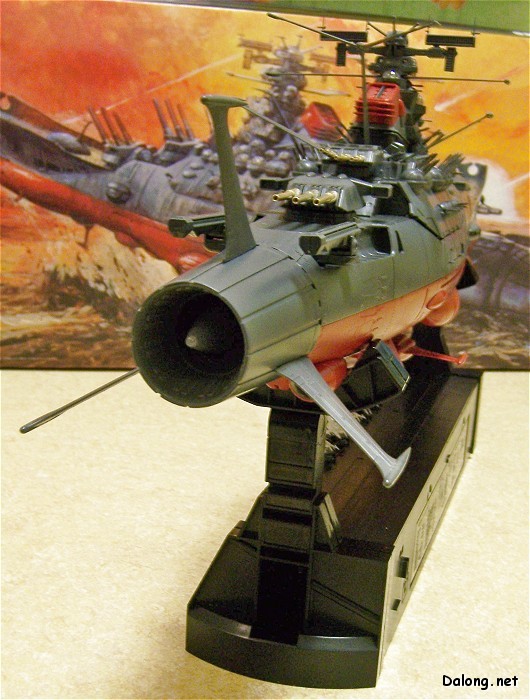
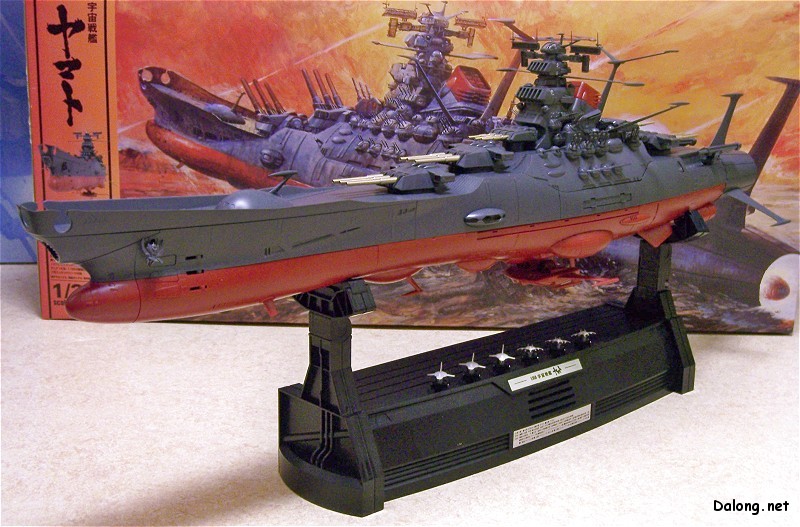
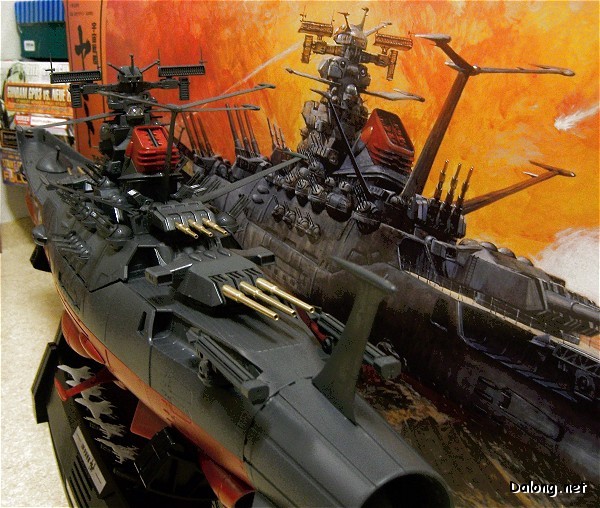
● The significance of the PG Yamato release
2006.. there was a whole lot of debate about what that year's PG would be, and there were even rumors that a few candidates had made it to the prototype stage — but in the end, nothing was released. The biggest reason was probably that there just weren't any units that would have the same impact as before. It's the most expensive grade to develop, so it can only work with a top-tier, blockbuster unit that can match that with sales.
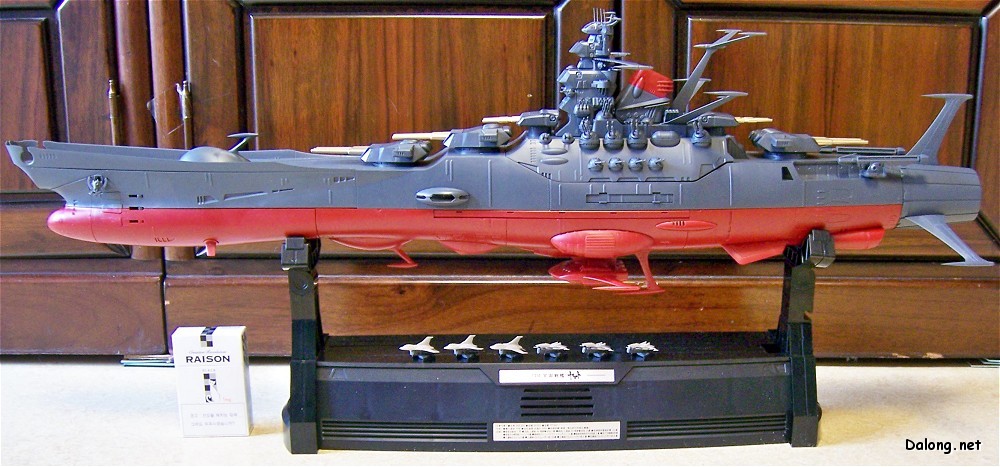
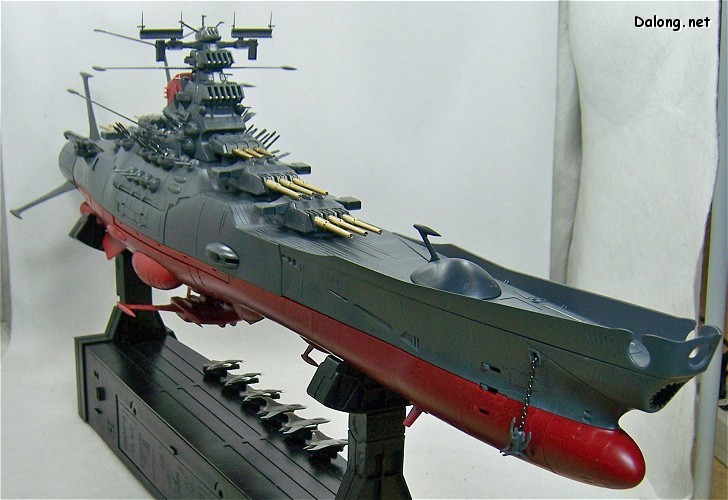
Anyway, the news that surprised a lot of people instead was the announcement of the 1/350 Yamato. Aside from the fact that it's a battleship rather than an MS, the overall development concept and level of quality was nothing short of PG — it was previewing a truly ultra-deluxe kit. It seemed pretty obvious that the PG development team was at the core of it, and it looked like they had changed direction when it became difficult to select an MS item. And when Kawaguchi Meijin, the driving force behind Bandai's development planning, visited Korea, he even said it was essentially the thing standing in for that year's PG. Yeah, fair enough. I guess there's nothing to do but accept this as the PG of 2006 ^^; (Though in the end, whether the development dragged on or not, the release date was pushed back to early 2007.)
As an aside, the main concept behind the 1/350 Yamato — reborn as an ultra-high-priced kit at ¥45,000, unprecedented even by PG standards — was said to be "recreating everything you can imagine." For Bandai, Yamato played a decisive role in giving birth to Gunpla, and the anime itself is a deeply significant work in the history of Japanese animation. It was also something that Korean old-school fans born in the 70s, myself included, could experience through TV, and many people were deeply captivated by its unique mechanical world. I too was enthralled by the space battles of that massive battleship at the time, and it remains in my memory as a masterpiece that instilled a certain romance — particularly for the illustrations depicting its internal mechanics, and for fascinating space battleships like the Andromeda.
And in Japan, there are overwhelmingly more old-school fans who remember the romance of Yamato than in Korea, and it's precisely those old-school fans that this 1/350 Yamato was aimed at. If you watch the Yamato TV commercials that aired in Japan, it's pretty blatant who the main target demographic is — scenes of balding middle-aged men in their 40s gathering after work to build the Yamato together, lost in nostalgia.. ^^;
There are probably quite a few people who feel a slight aversion to Yamato itself, seeing it as a symbol of Japanese militarism from World War II — and I think that's likely because those people have never encountered the Yamato anime at all, or simply aren't familiar with its unique mechanical world. Of course, the design of Space Battleship Yamato was taken directly from the design concept of the actual battleship Yamato, and in a way, the story could be seen as something that helps Japan — a defeated nation in WWII — overcome that sense of loss. But the atmosphere of the early anime is clearly difficult to view as militaristic in that sense.
More than that, among the newer generation there are very few people who have properly experienced Yamato, so naturally that nostalgia and emotional connection doesn't exist for them — which is why I think it's honestly hard for them to understand the cultural shock of an ultra-deluxe Yamato release. It probably just feels like an unusually unique and cool kit came out. And since there's no shared memory with those who do remember Yamato, the first thing that might come to mind is probably that image of it as a symbol of WWII militarism.
But once you actually get into the Yamato anime and its lore, it's absolutely packed with all kinds of mechanical elements and cool warships that really stir up that guy's-romance feeling. In some ways, it goes even beyond the Gundam series. Anyone who watched the old Yamato anime back in the day (called by various names like Space Battleship V, Earth, Taeguk, or Uranara depending on where you were) will probably relate to a lot of this — it's just the kind of setting that gets your heart pumping. Especially if you're a Gundam fan, most of you will know exactly what I mean. The reason old-school Korean fans go crazy for it is precisely because of the nostalgia for those mechs that used to completely blow their minds back then. Of course, the dramatic story and atmosphere play a big part too.
Personally, the anime aside, what really sticks in my memory is this 500-won Yamato sticker activity set they had back then ^^; It was a simple setup where you'd stick warship stickers onto a space background illustration, but I loved those warships so much (especially Andromeda — the best!) that I'd eagerly copy them by hand and even tried cutting them out of cardboard to make rough little models. Those memories are coming flooding back.
I've rambled on way too long ^^; Let's get into the kit itself.
● Detail & Assembly
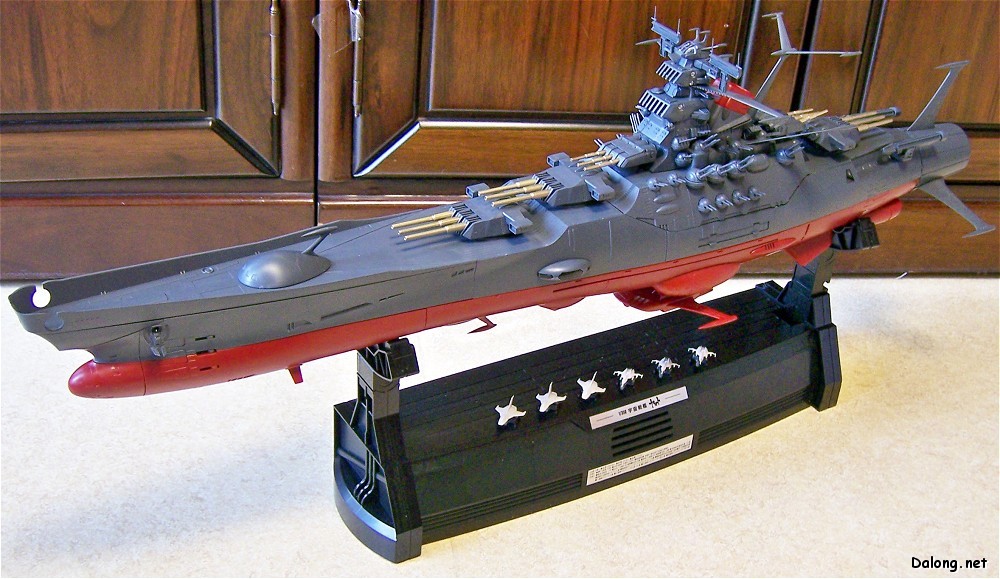
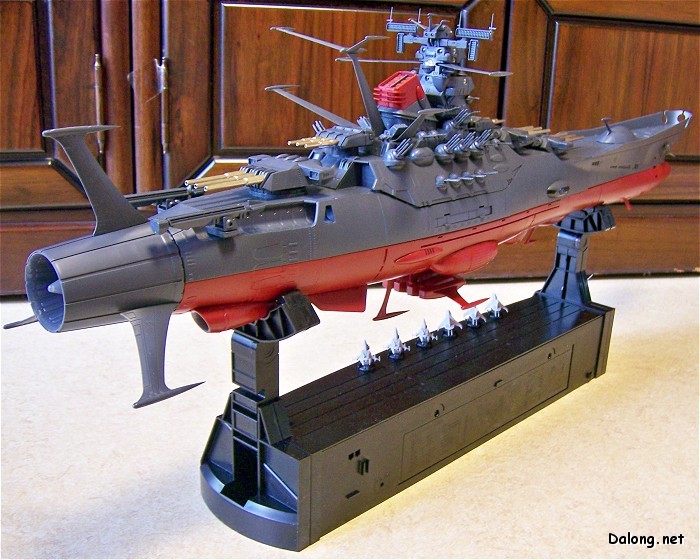
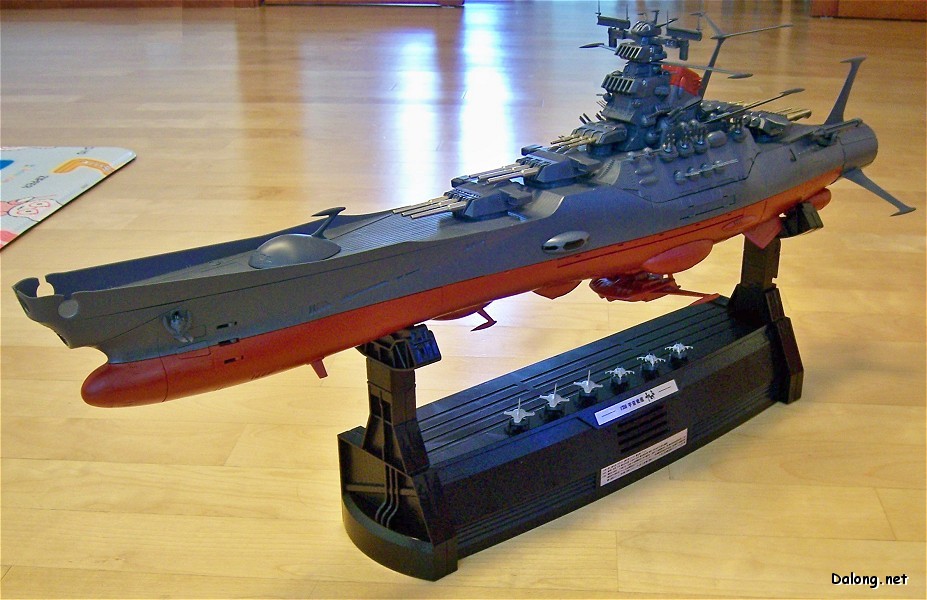
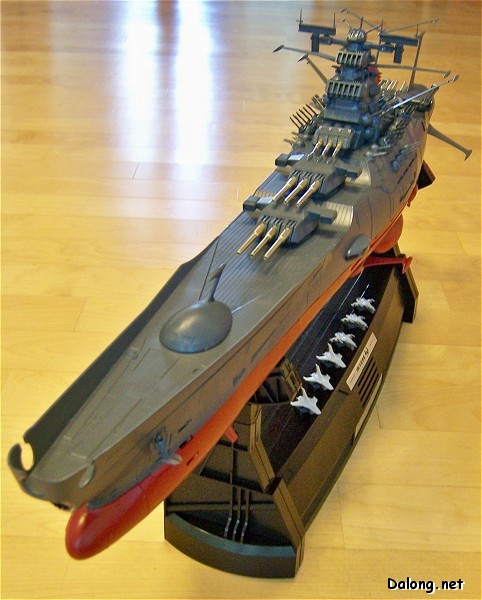
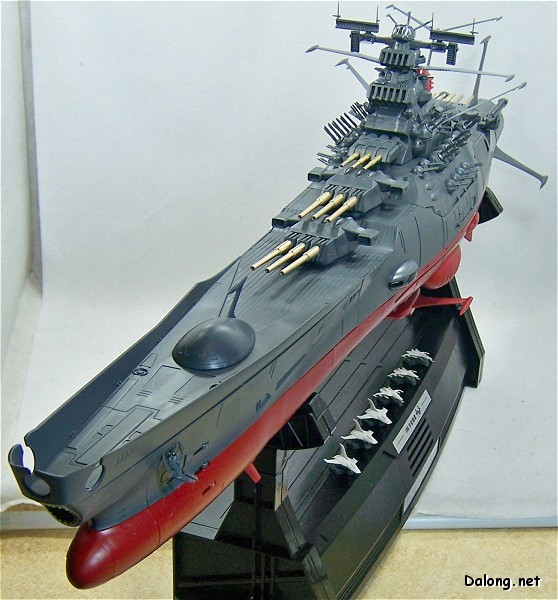
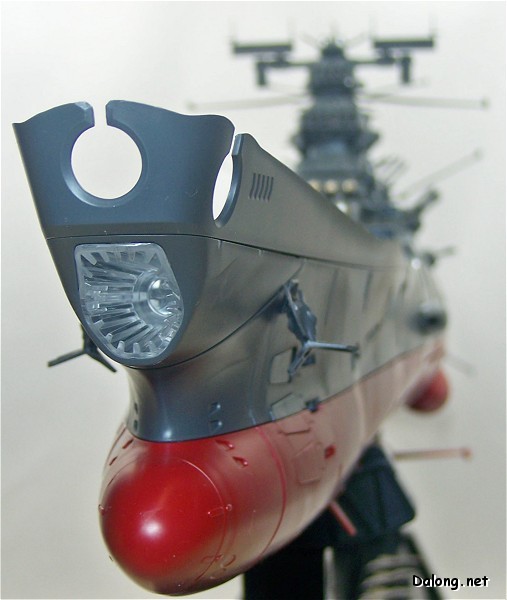
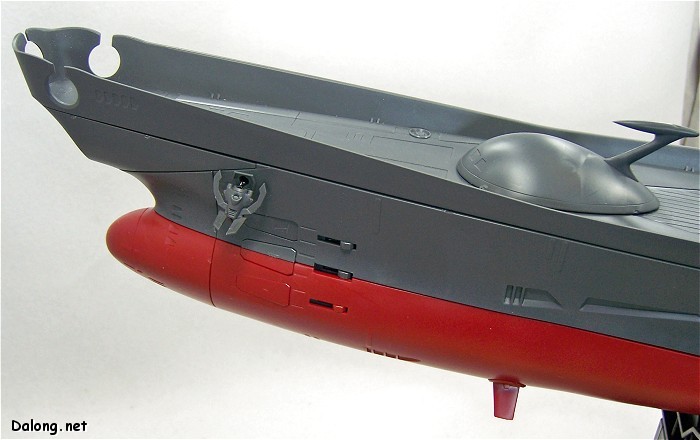
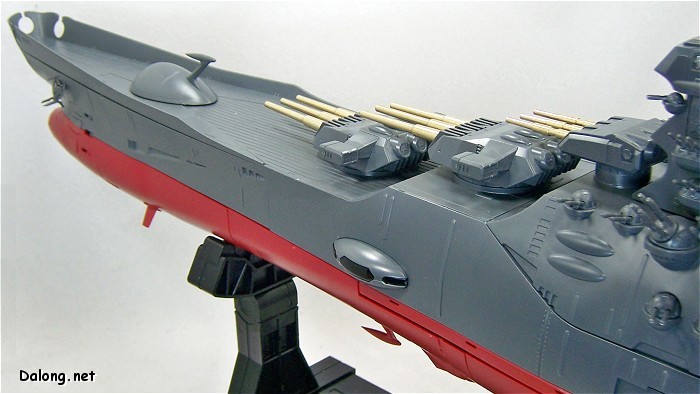
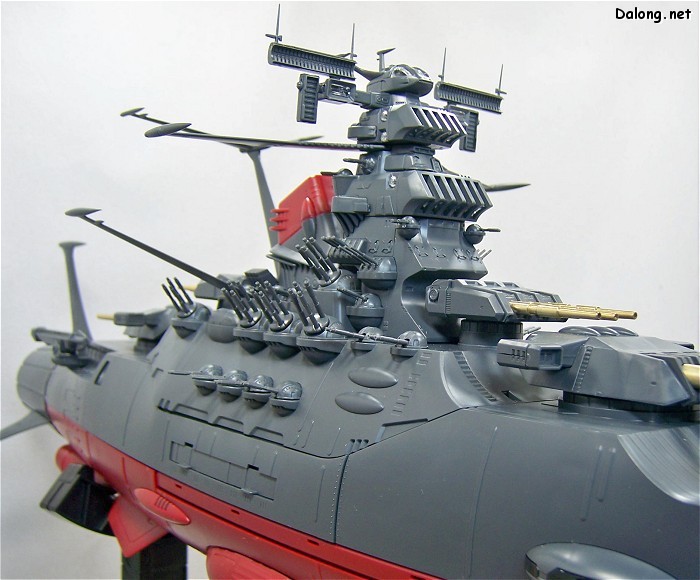
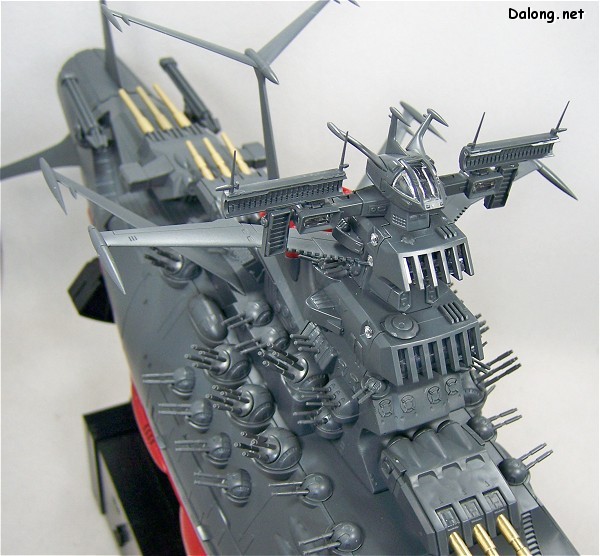
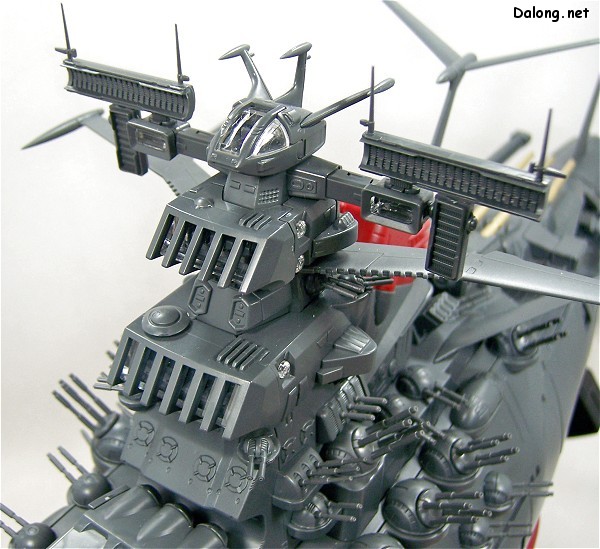
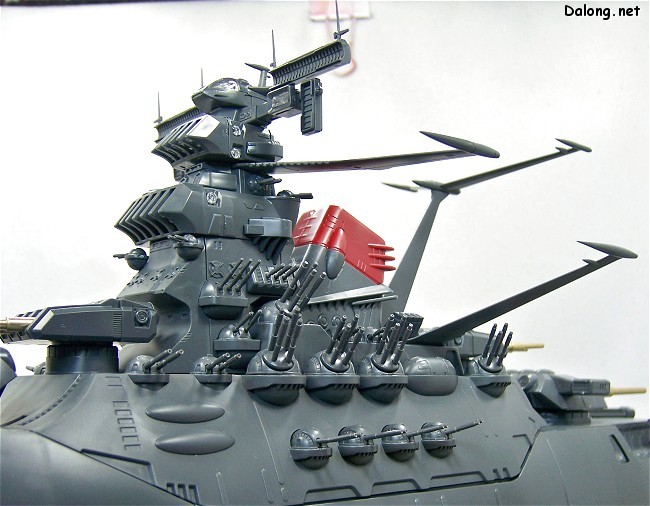
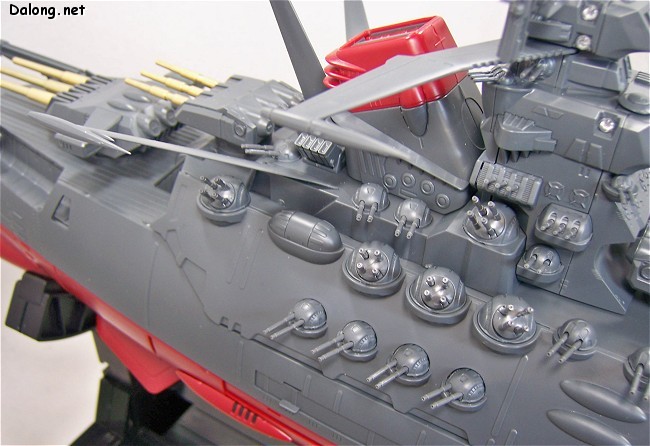
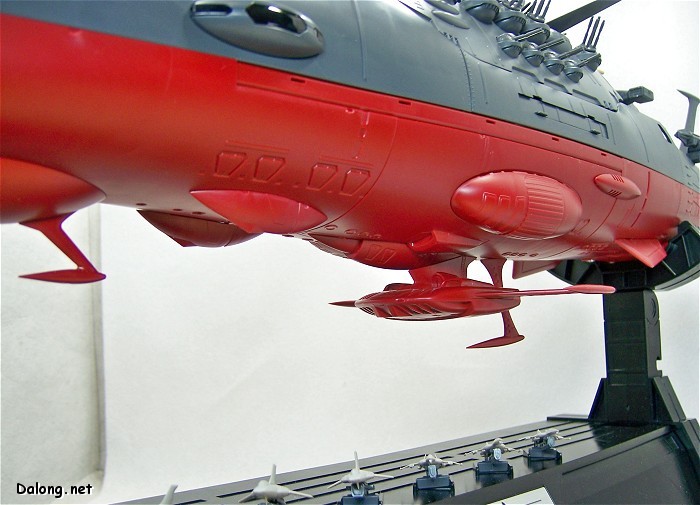
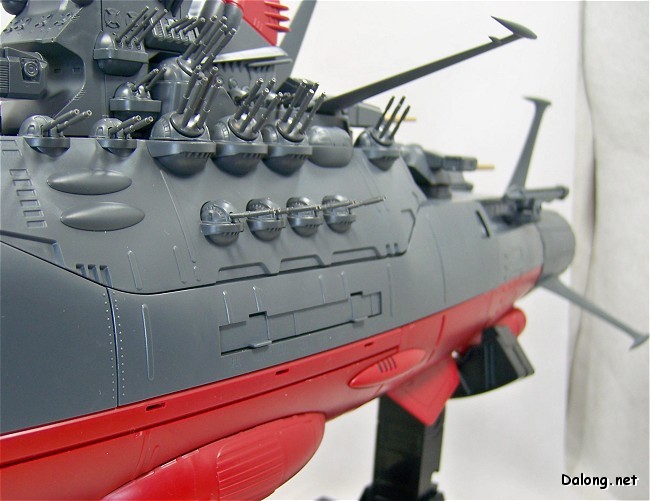
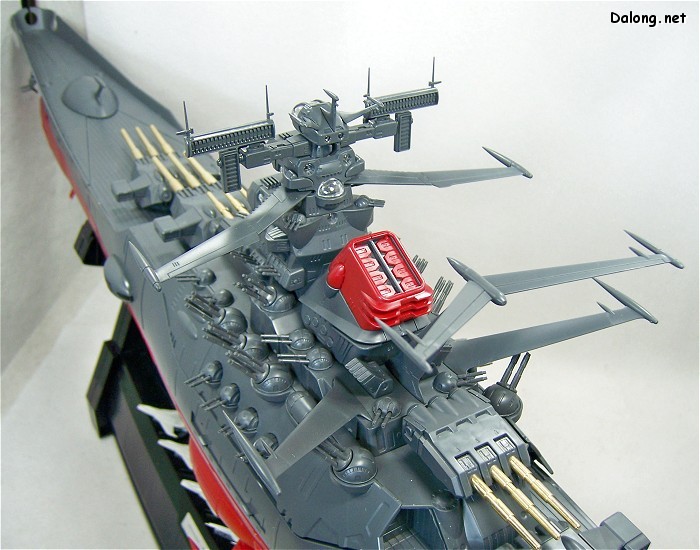
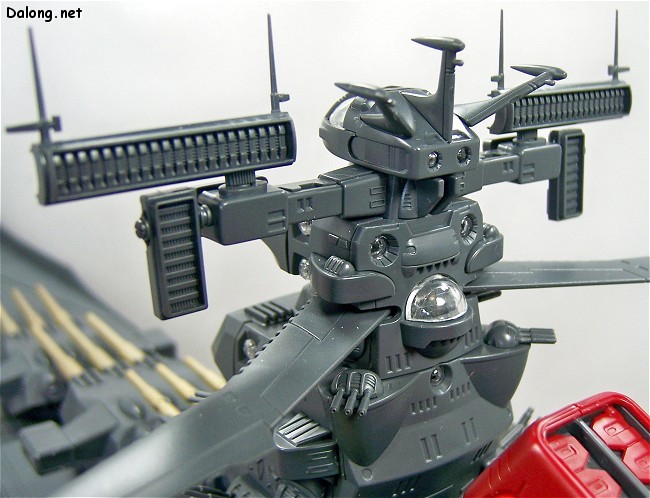
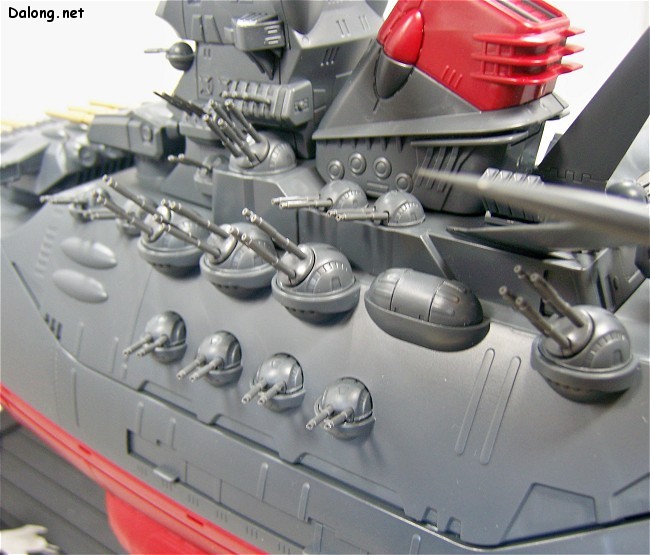
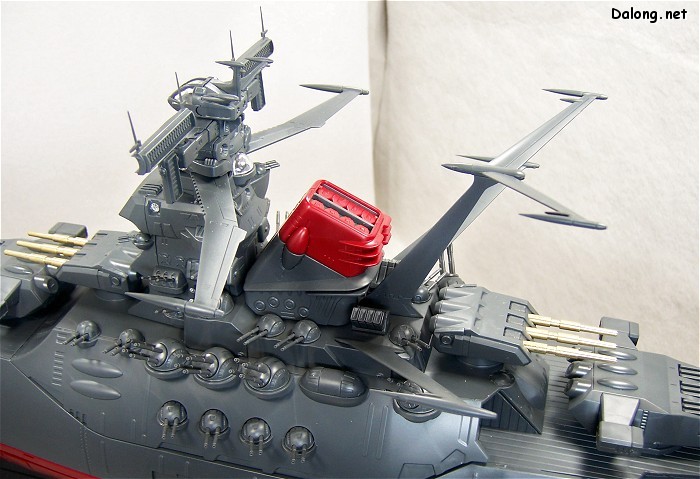
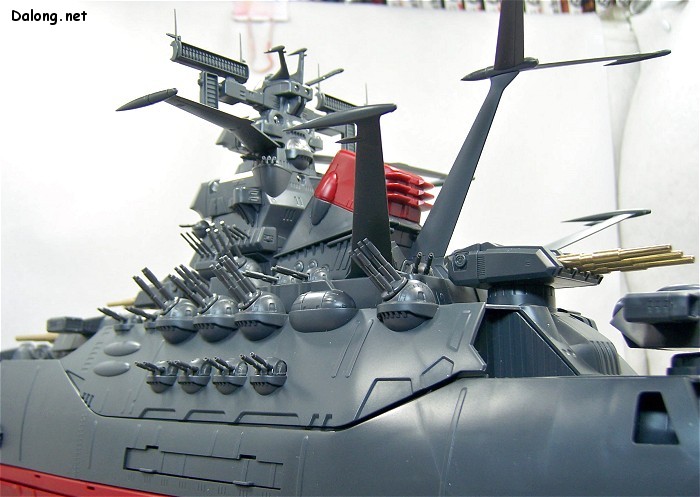
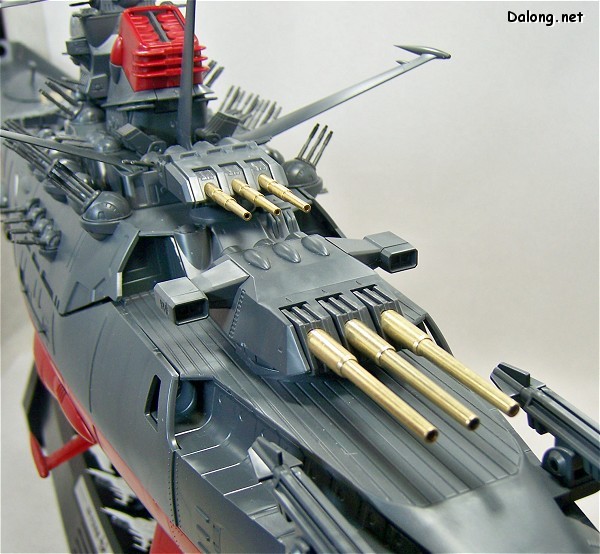
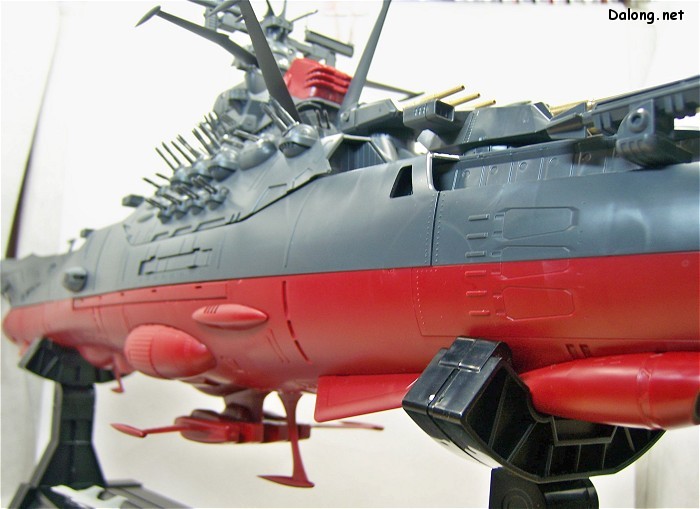
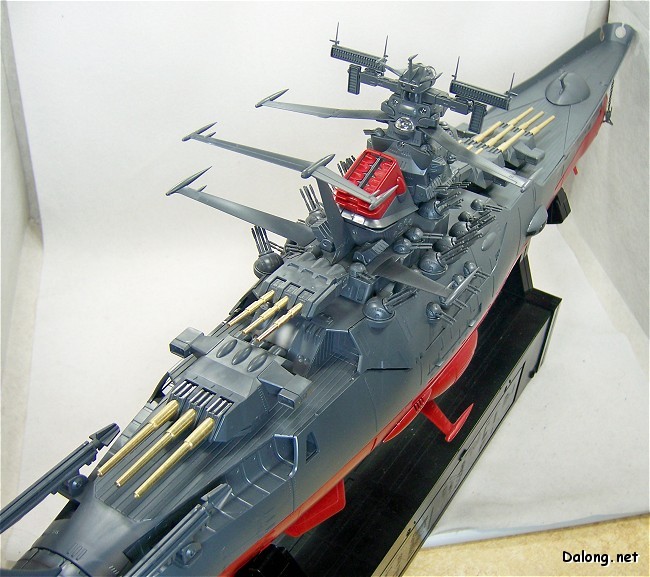
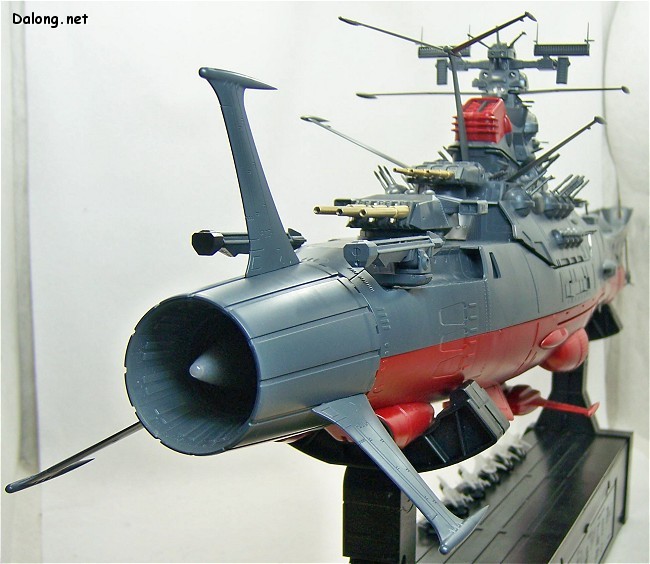
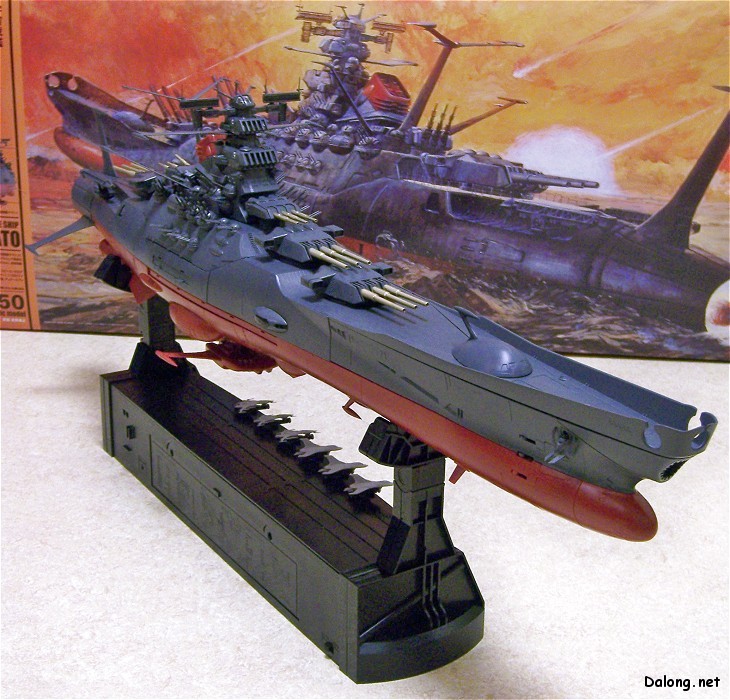
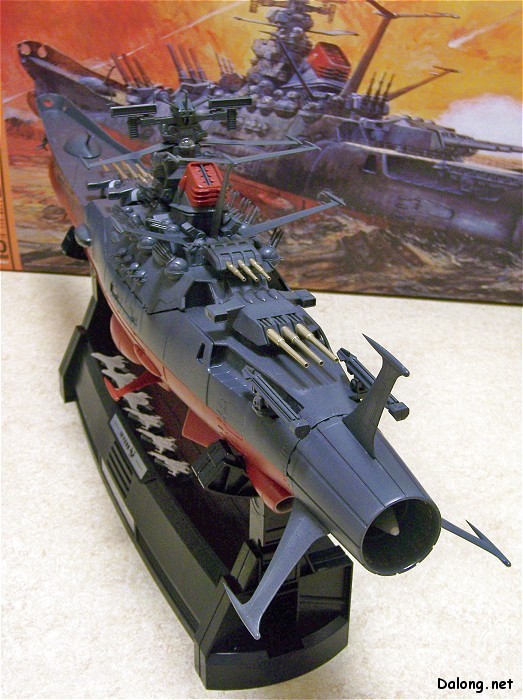
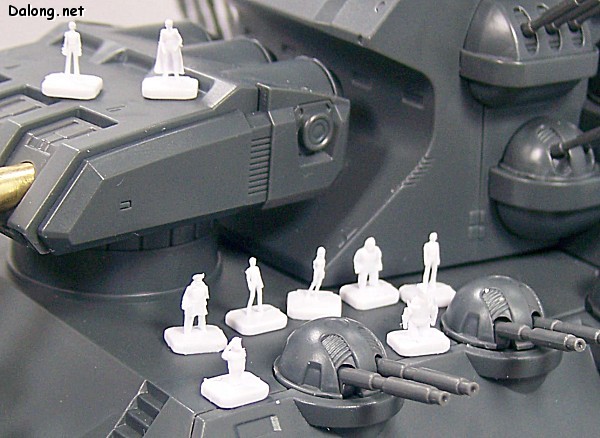
Anyway, true to its status as a nostalgic icon that really fires up that guy's-romance feeling, this kit was clearly made with that in mind. As you'd expect from a modern Bandai kit, solid color separation and fine detail are a given, and on top of that, they've done a pretty faithful job of recreating all sorts of gimmicks that open and close here and there. Honestly, I think just doing that much would've been incredibly impressive on its own — I really wanted a properly detailed Yamato. Sure, detail-wise it might look a bit rough compared to Tamiya's Yamato, but at least from a Bandai-style perspective, I'd say it's more than satisfying. And clearly taking a cue from recent Kotobukiya kits, there's no shortage of sharp, pointy parts everywhere. (Which means I've stabbed myself quite a few times, thanks to that.)
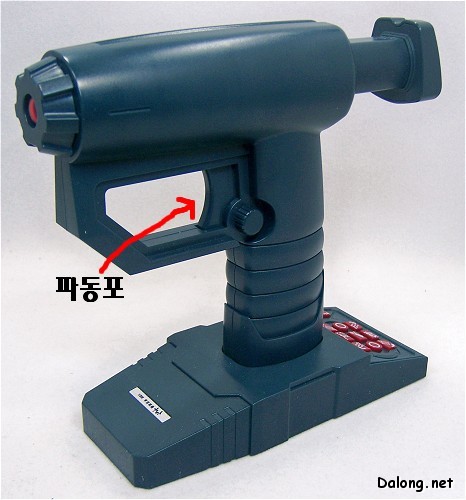
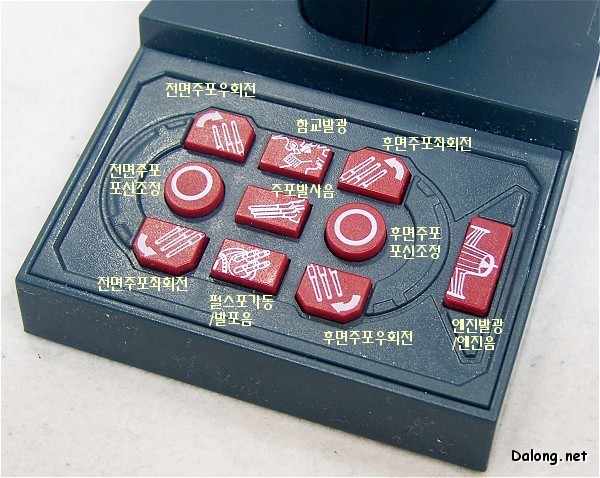
And the biggest highlight — and the main reason for the price hike — is of course the complex electronics package. With all those LEDs, motors, an electronic control unit, and even a dedicated speaker, this is a whole different level compared to any Bandai kit before it. That's why the stand needs three large batteries, and it even comes with a pretty slick-looking infrared remote control.
I expected assembly to be tough given all the moving parts, but actually building it felt much easier than HY2M-type kits. There's no wire stripping or twisting involved at all — everything is connector-based, just like computer components, so you literally just plug things in. It couldn't be simpler! The assembly difficulty is surprisingly low. Anyone with a bit of plastic model experience can put it together without any trouble. Almost all parts snap together securely, though a very small number do require glue.
There are also detail-up parts and etched parts included for those who want to push the refinement even further. The etched parts are actually on the easier side as far as etching goes, and most of them are railing-type pieces. As long as you have the right tools for assembling etch, it shouldn't be too difficult — but given that the structure is already tricky to store as it is, I was worried about durability, so I left them off. (It's absolutely NOT because I was lazy! lol)
Anyway, unlike your typical ship kit where the bottom hull is usually one solid piece, the way you build this one — putting up a frame, adding bulkheads, then fleshing it out — gives it a really unique feel that's just in a class of its own. It's like Bandai-style ship modeling, I guess. It's fresh in a lot of ways.
● Electronic Features
As shown in the assembly process, the power supply from the stand connects to the Yamato's main body via a cord, and this cord also doubles as the means of securing the Yamato to the stand — in fact, I'd say the securing function is even more important than the power delivery. With so many things attached, storage is already a pain, so if it were also hard to fix onto the stand, it would've been a real nightmare.
Power supplied from the stand's batteries flows into the central electronic control unit, which handles all power distribution and operation commands. At first I thought, why do you need such a complex control unit just to turn on some lights and make some sounds? But once I actually started running all the different functions, it made sense.
- Wave Motion Gun Gimmick : As you can see in the video above, I initially figured it would just light up an LED or something... but it actually plays out as a full sequence — complete with loud sound effects — going through warm-up, firing, and cooldown. You can't help but think, wow, they really put a lot of thought into this! Though I'll admit it does feel ever so slightly toy-like. Not that the quality is toy-like — it's more that the concept itself is a bit of a toy-ish idea. Either way, the recreation of the Wave Motion Gun firing scene with its multi-layered lighting is genuinely impressive. The video only captures about 20% of how it actually looks... especially the part where light flows through each individual ridge inside the Wave Motion Gun barrel — you can't see that at all in the video. It just comes out as a flat white blur, which is a shame T_T (Bottom line: it looks way cooler in person.)
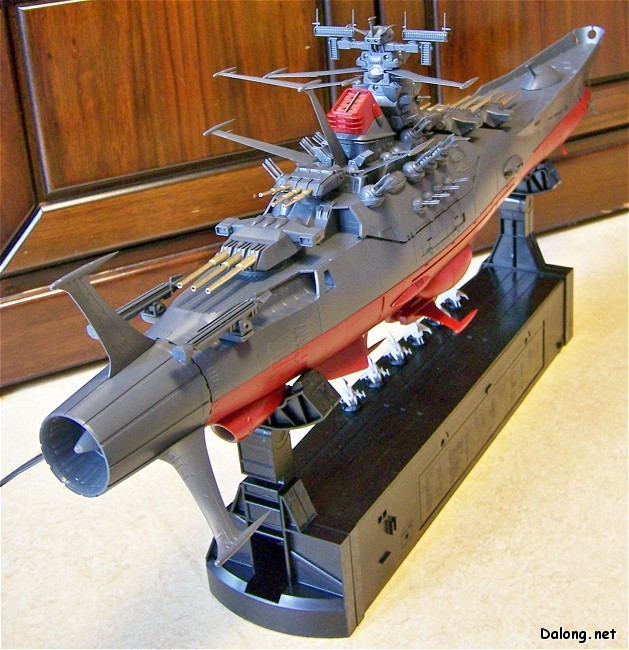
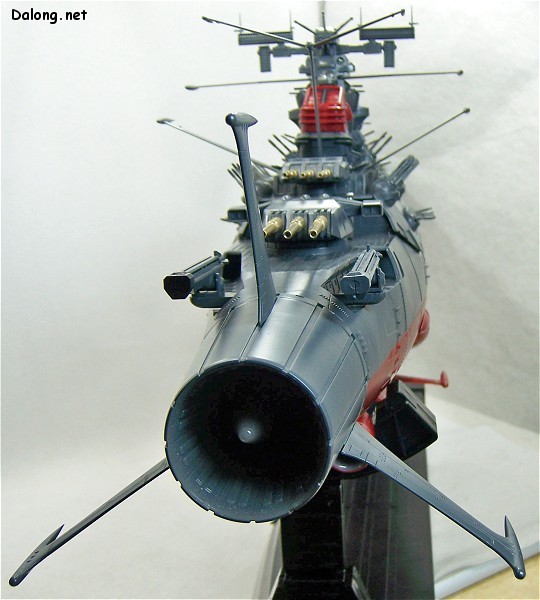
- Engine Gimmick : I figured the engines would just light up too... but again, there's a whole sequence — like it's firing up and about to blast off. It's a bit less dramatic than the Wave Motion Gun, but still a fun touch.
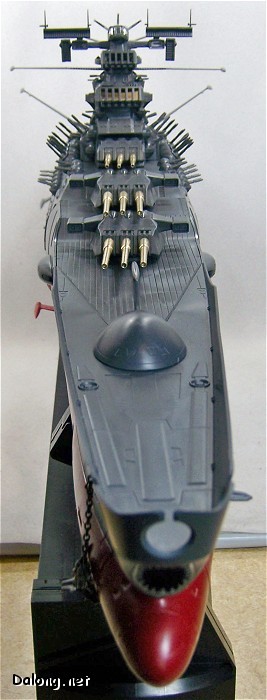
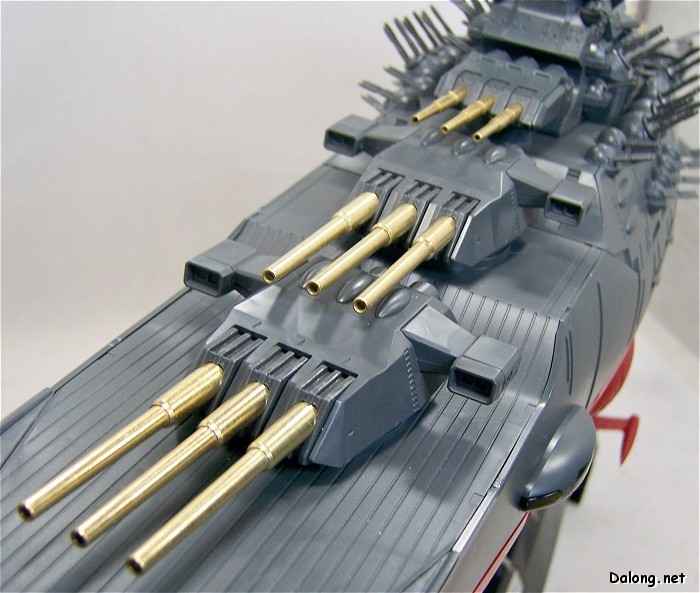
- Main Gun Gimmick : The front three and rear two turrets each have independent left-right rotation and up-down adjustment... but alignment seems to be a bit of an issue. When you flip the main switch, they're supposed to reset to their home position first, but they often don't align properly. There is a tool included for adjusting the alignment, but it doesn't feel like it does much -.-; In my case especially, the rear turrets make some kind of awkward movement when rotating, like something is catching. I even took it apart to check, but couldn't figure out what's causing it... Anyway, using the remote to spin the motors around does give you that fun RC-control feeling. The firing sound isn't really to my taste, but it's better than nothing.
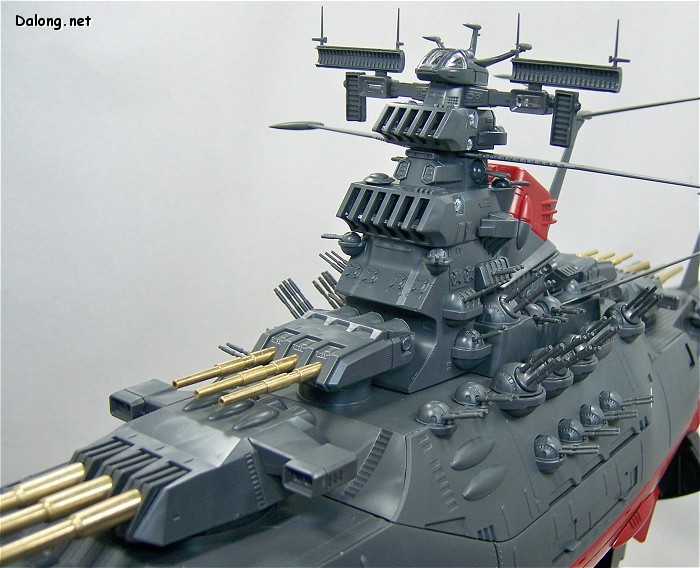
- Pulse Gun Gimmick : With 20 small guns rapidly sweeping back and forth while firing sounds play, it gives a fun, lively feel. The guns move a bit too fast and come across as a little frantic, but overall it's a well-executed gimmick that works reliably. Just make sure to align the guns properly when assembling them. (See the assembly process for reference.)
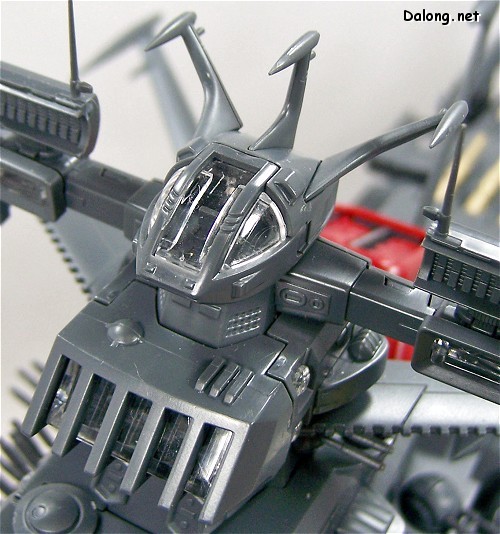
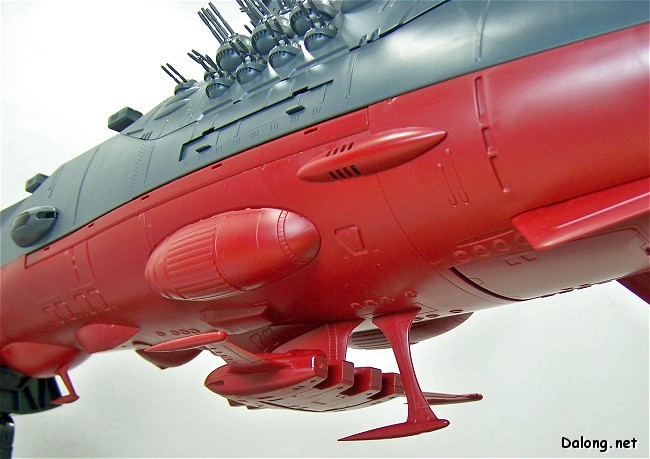
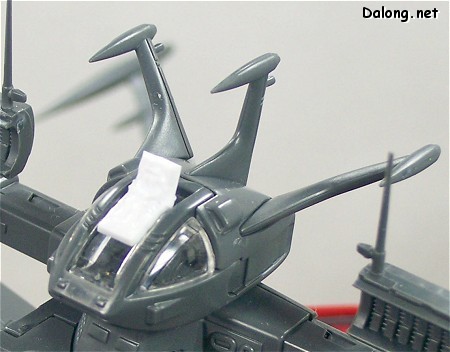
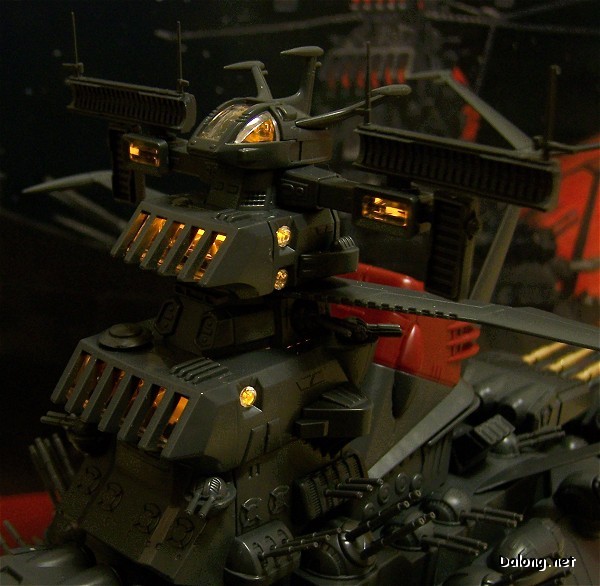
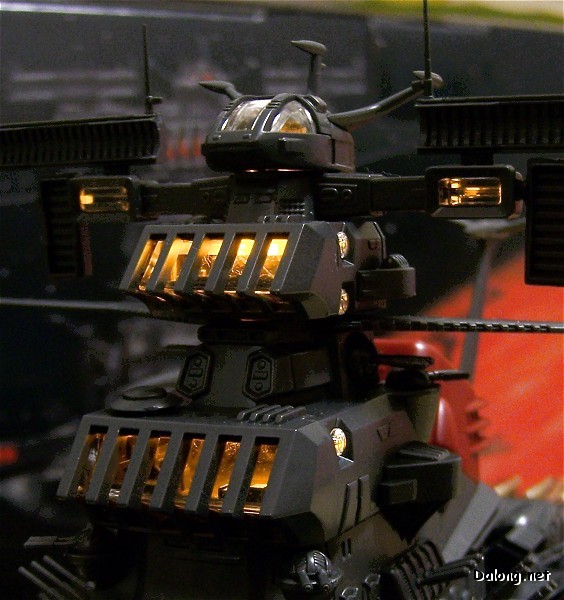
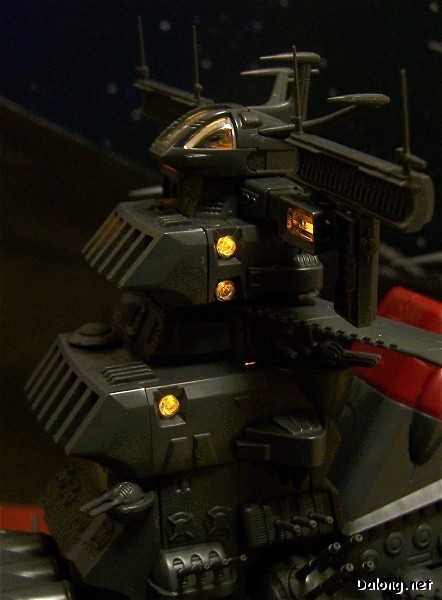
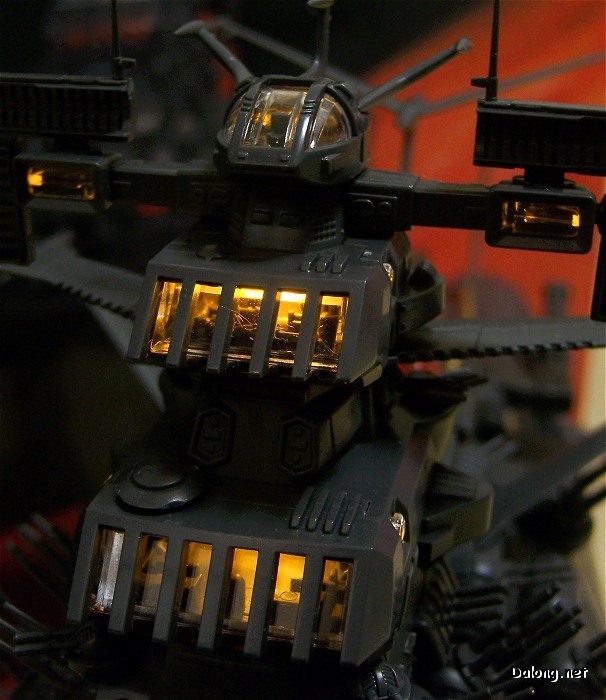
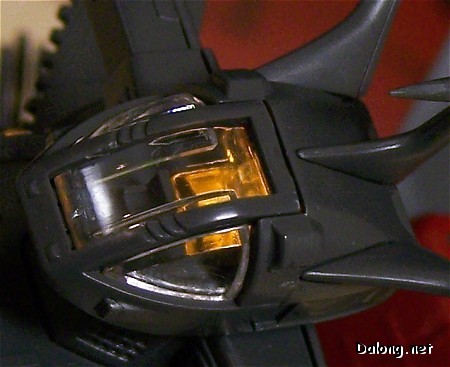
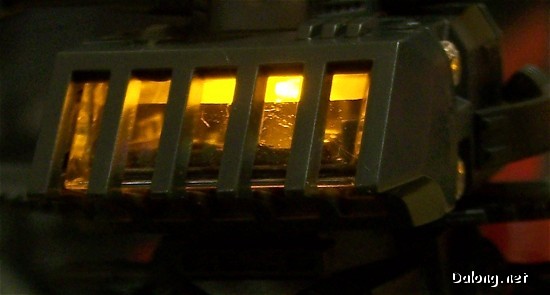
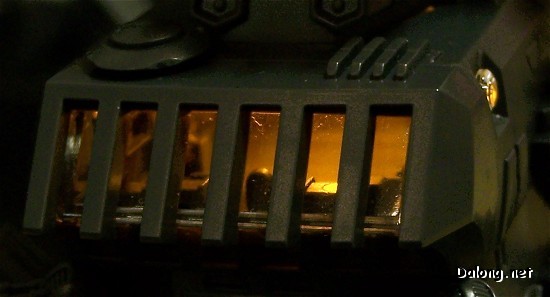
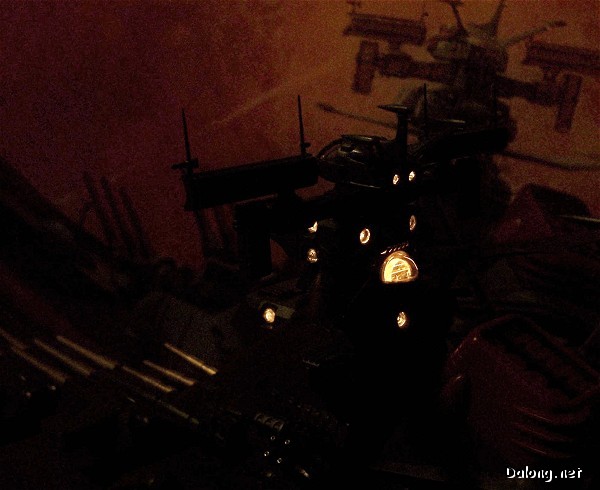
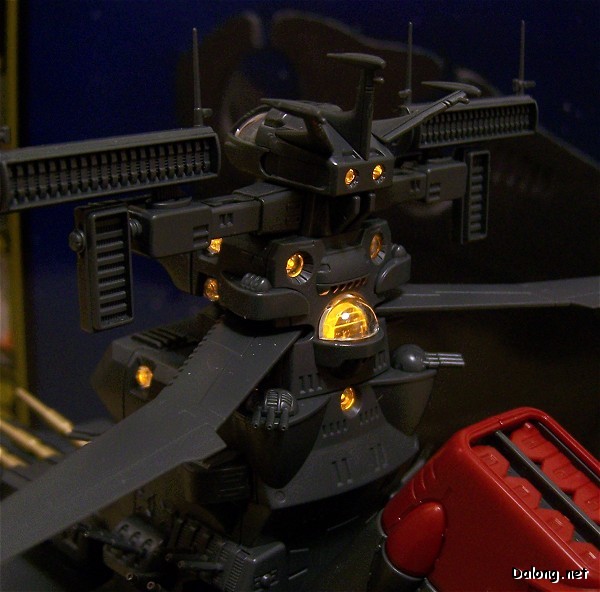
- Bridge Gimmick : The bridge simply lights up via two LEDs... but with aluminum tape lining the inside, the light only subtly leaks through the various windows, which actually looks really cool. ^_^ Turn the lights off and it's gorgeous. At the same time, the carrier bay on the underside of the hull also lights up. (I forgot to include a photo of that; I'll add it within the next few days ^^;;)
To pull off all these electronic gimmicks, the interior of the hull is packed solid with motors and control units, which gives it a satisfyingly substantial feel. Sure, all of this has driven the price up quite a bit, but it definitely gets across the feeling that they really pushed hard to bring every imaginable feature to life.
● Other Gimmicks
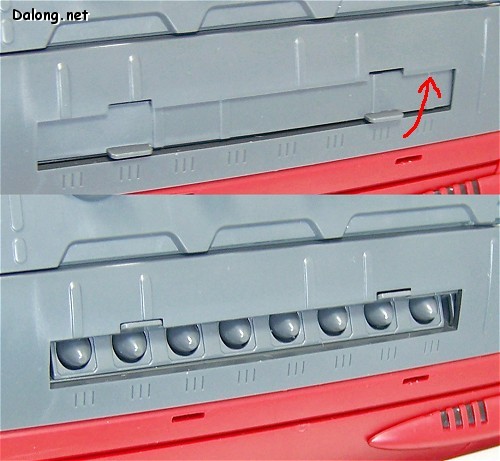
- Front Torpedo Gimmick— the loading and unloading is somewhat automated via a spring mechanism. That said, the action isn't as clean as you'd hope, so it feels more semi-automatic. Also, there are torpedoes at both the front and rear, but this gimmick is only on the front, which is a slight disappointment. The rear probably had to give it up to make room for the other motorized gimmicks.
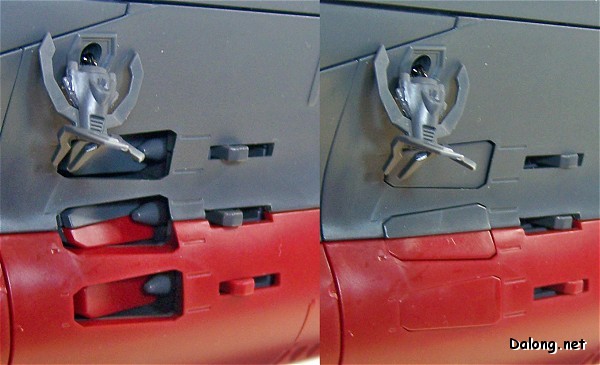
- Side Torpedo Gimmick— opening the cover does make them pop out with a snap, but the amount they extend is pretty small, so it's not very noticeable;
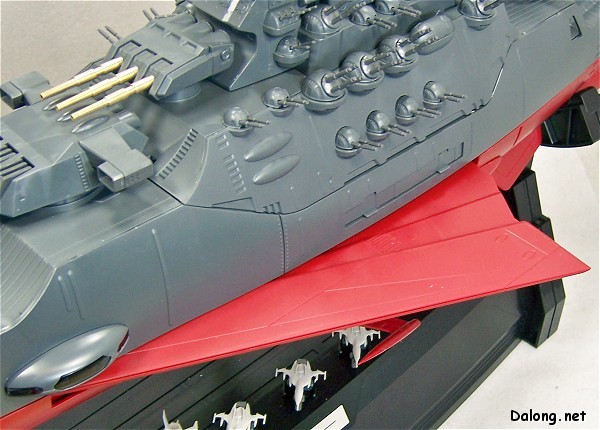
- Wing Gimmick— the wings are designed to spread automatically via a spring, but in practice the spring tension is weak and there's a slight defect in the mechanism itself, so they don't snap open as smoothly as you'd expect.
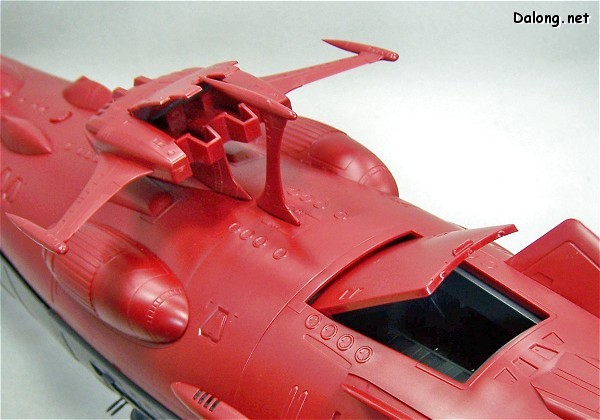
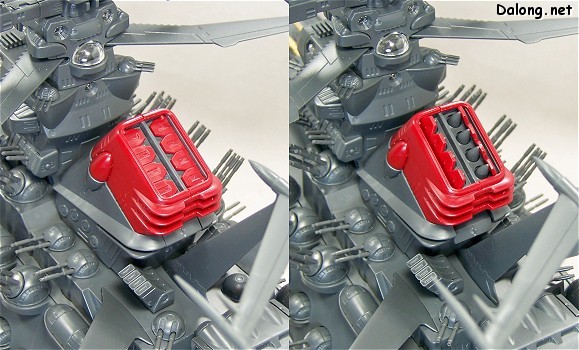
— The chimney-shaped section behind the bridge has a Missile Gimmickthat's put together in a pretty fun way.
- Anchor Gimmick — the use of a real metal chain is a nice realistic touch, and it extends and retracts easily.
— Two carrier bay hatches on the underside of the hull open up, but the structure makes it a bit awkward to actually put in and take out the carrier aircraft parts.
● Drawbacks & Overall Thoughts
First off, I do agree with Bandai's claim that they packed in every feature you could dream of and built it with the latest detail and quality. It really does deliver on what you'd imagine — guns that move, pulse guns that sweep, lights that come on in all the right places. It's a fantastic kit.
That said, the electronics do have a few frustrating points. Setting aside the higher price, there are moments where something just doesn't work right. In my case, there were quite a few times when powering it on wouldn't trigger the initialization sequence — I'd just hear the motors spinning uselessly inside. And when that happened, the remote wouldn't respond either.
The thing is, the electronics assembly on the Yamato is so straightforward that there's almost no room for user error, which makes it really hard to figure out what's actually wrong. You just end up pulling the batteries out and putting them back in, toggling the switch on and off, and eventually it comes back to normal. Since I've seen others reporting similar symptoms, I do wonder if there might be a slight defect — but since it works fine most of the time, it's tolerable. ^^; If anything, the more practically annoying issue is that getting the main gun turrets to line up properly is no easy task.
I'm not sure whether to call this a flaw, but the sounds are just ridiculously loud -.-;; There's no volume control whatsoever, and the Wave Motion Gun and engine sounds in particular are loud enough to echo through the entire house. Definitely don't touch it late at night. On the plus side, there is an audio jack, so you can plug in earphones and listen that way. Just don't make the mistake of firing it up in the middle of the night without thinking — you'll regret it!
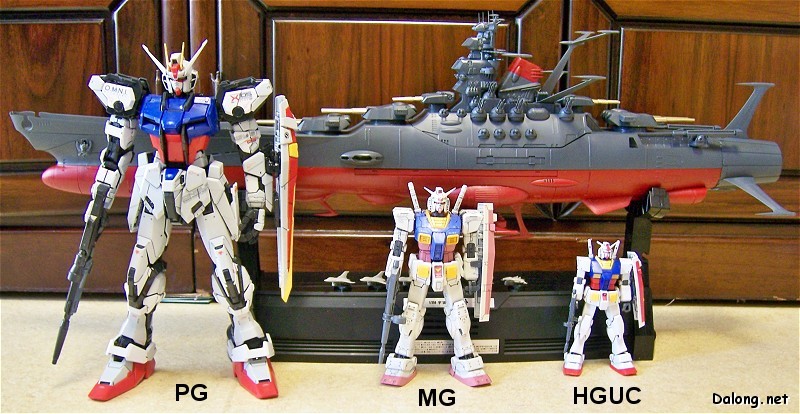
And here's a fundamental issue — the sheer size of this thing at 76cm makes storage a real headache. Luckily, I just barely managed to squeeze it into a display case, but beyond the size, there's so much stuff sticking out in every direction that it's a genuinely difficult kit to store; You could remove the sharper parts before putting it away, but the bridge section has all the LEDs tangled up in it, so it doesn't come apart easily. Unless you go out and buy a dedicated display case for it, this is something everyone's going to have to think hard about.
There are a few disappointing points like these, but there's no question that this is a landmark kit that will go down in Bandai plastic model history. Fortunately, early sales have been strong, so there's a chance this could spark a whole wave of redesigned Yamato kits.
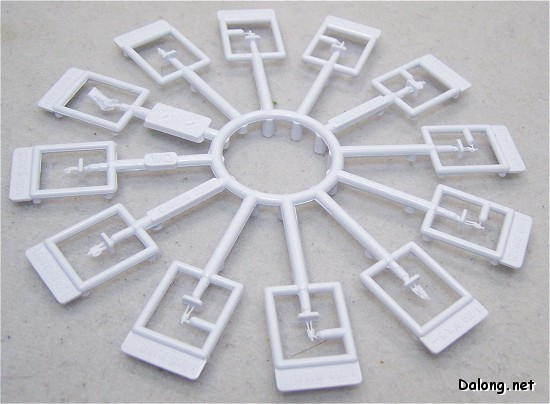
And here's one thing you'll notice as you're building it — the motorized gimmick sections and all their related parts are completely separated onto their own runners/parts, and they're even packaged differently. What this basically tells you is that they've got a standard edition in mind that leaves out all these pricey electronic gimmicks. Maybe around ¥20,000?
They've only laid the groundwork for it, and whether it actually gets released depends on market conditions, so it's hard to say for sure — but it definitely feels like a real possibility. While we're at it, I'd love to see the standard edition's interior filled with engines and all kinds of internal structures done up in detailed molding. ^_^
This is a kit that feels like it fulfills a long-held dream. Purely on price, it's an expensive kit that'll have you going back and forth in all sorts of ways, but it at least seems to deliver its worth — both physically and emotionally. Though that really applies to people like me who grew up with a sense of nostalgia and longing for Yamato. If you're mainly expecting intricate mechanical gimmicks or Tamiya-level precision detailing, you might come away a bit disappointed. Because purely in terms of exterior refinement, the price-to-quality ratio is definitely not high.
I want to give a big "well done" to the Bandai developers who must have worked so hard to make everything imaginable possible, so no one would have any regrets. And… if you're going to do it, please give us the Andromeda too! ^^;
PG Yamato | 2007.1 | ¥45,000
AIThis page was translated by Claude Sonnet.